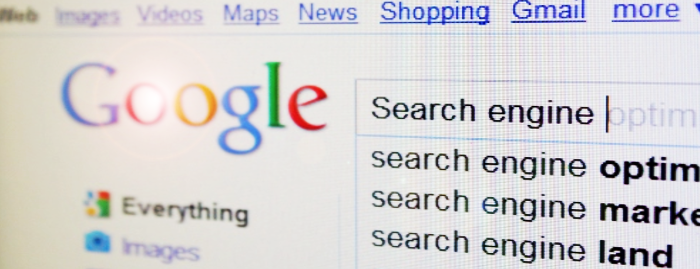
The success of new domain extensions (.club, .email, .nyc, etc.) depends entirely on how search engines treat them. No matter how promising an extension’s meaning may be, without search engine acceptance its future is bleak. Can new extensions deliver better rankings for certain keywords? In other words, if you want to rank for the term “cars,” could you pick cars.club since the .com is long gone? So far, Google has denied that new extensions provide any SEO ranking advantage. This makes sense: Google’s goal is to surface the most relevant websites for what users are searching for. As its technology improves, the company relies less on specific words appearing in the domain itself. That said, domain extension remains a factor in the algorithm and will always carry some weight.
Search engines and the meaning of extensions
There is evidence that Google uses extensions (such as .com, .cl or .com.ar) as signals to determine a website’s credibility or geographic relevance. For example, “.com” is generally perceived as more reputable than “.tk.” A website using the “.cl” extension will have a better chance of ranking for searches made from Chile.
A study by econsultancy.com suggests that Google may already be factoring in new domain extensions when building its rankings. The study looked at how the “.berlin” extension performed for searches made from Berlin. The results: for local searches, “.berlin” domains ranked 18% higher than “.com” or “.de” (Germany). On top of that, half of the “.berlin” domains analyzed ranked better for local searches than for global ones.
This opens up real possibilities for businesses whose audience is concentrated in a specific city or region. If the pattern holds, companies would have a new way to reach local users simply by choosing the right extension. But will Google ever use extension meaning as a broader ranking signal?